The Age of Autonomous AI Agents: Optimizing for Action-Taking AI
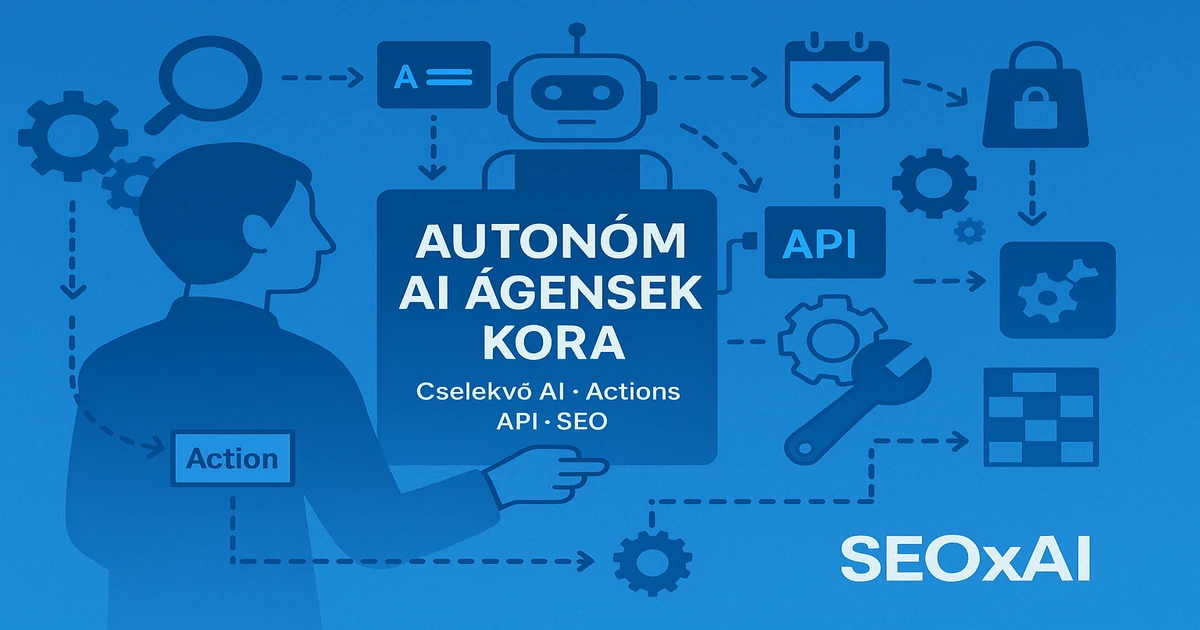
Search used to be about answers. We asked a question and got links or AI summaries. The next evolutionary step is when AI not only answers, but also takes action on our behalf. Autonomous AI agents can execute complex, multi-step tasks. But how do we optimize our website for a “visitor” that isn’t human?
What’s the difference between a chatbot and an autonomous agent?
While a chatbot (like the base version of ChatGPT) is reactive, an agent is proactive. An agent can plan independently, break down a complex request into sub-tasks, and use external tools (e.g., websites, APIs) to achieve the goal.
-
User request (example): “Plan me a weekend trip to Budapest next month, finding the best value flight and a centrally located, well-rated place to stay. And book them too.”
-
The agent’s sub-tasks: Search flights across multiple airlines → Search accommodations on booking portals → Analyze reviews → Compare prices → Complete the booking using the user’s details.
-
Implication: In the future, your website will need to optimize not only informational content, but also transactional workflows for AI. AI Shopping Agents represent the first generation of this.
How can you make your website “agent-friendly”?
Optimization focuses on two main areas: structured data that describes your capabilities, and workflows the agent can execute.
-
Publish machine-interpretable workflows (Actions): The most important thing is that AI understands what actions can be performed on your site. Use
Actionschema: Schema.org’sActiontypes (e.g.,SearchAction,ReserveAction,OrderAction) describe how a given process works, what inputs it needs, and what outputs it produces. -
Publish APIs: The most advanced approach is providing a public API (Application Programming Interface) that agents can call directly. This is the cleanest communication channel for machine-to-machine interaction.
-
Create process-oriented content: In addition to traditional content written for human readers, create guides that describe—step by step—how to complete specific tasks on your site. AI can interpret and follow these descriptions as well. For content development, prompt engineering is an excellent starting point.
-
Provide clear and simple user journeys: Agents (for now) can easily get lost in complex flows with many branches. Your booking, purchase, or registration process should be as simple as possible—few steps and clearly labeled. Too many pop-ups, ads, or unnecessary steps can confuse them.
What ethical and security questions does this technology raise?
Action-taking AI also comes with serious responsibility. Building trust is essential—and it takes more than technical optimization.
-
Privacy: How do agents handle users’ personal and financial data? Your website must meet the highest level of privacy and security protocols.
-
Liability: Who is responsible if an agent books the wrong flight or orders the wrong product? The dark side of AI SEO shows up here too—clarifying responsibilities will be critical.
-
E-E-A-T for workflows: Trustworthiness is critical here as well. Your website should clearly communicate pricing, cancellation policies, and user reviews. Agents will be designed to prioritize sites they judge to be more trustworthy. We covered credibility more broadly here: AI and E-E-A-T .
Frequently Asked Questions
When will autonomous agents become part of everyday life?
The technology already exists, and major tech companies (Google, OpenAI, Meta) are all working full speed on their own agent platforms. Widespread adoption is expected in the next 1–3 years, so it’s worth starting preparations now.
Does this mean every company will need an API?
In the long run, probably yes—especially in e-commerce, travel, and service marketplaces. A well-documented API will be the most effective way to communicate with agents. Early on, however, detailed Action schemas may be sufficient.
How can I test whether my site is “agent-friendly”?
Right now, there aren’t standardized testing tools for this yet. The best method is to try to run through your own workflows “like a robot”: Are the instructions clear? Are buttons and links descriptive? Does the process use as few steps as possible? You can also use the Schema Markup Validator to verify that your structured data is valid.
Enjoyed this article?
Don't miss the latest AI SEO strategies. Check out our services!