How to Track Changes in Google SGE
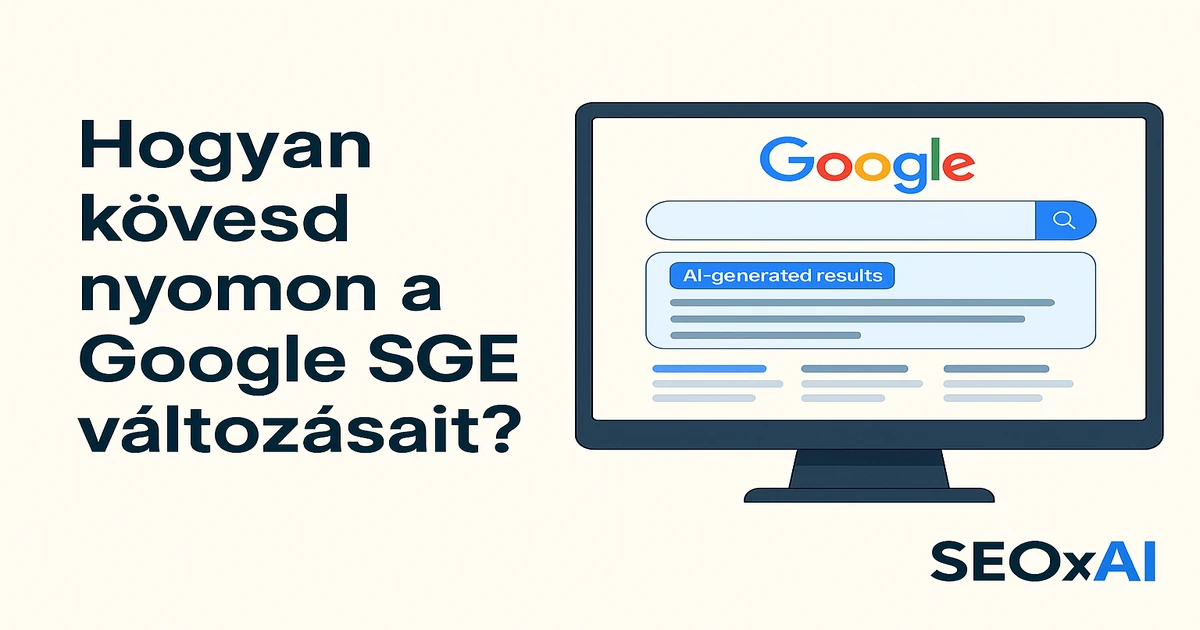
Google’s Search Generative Experience (SGE) is fundamentally reshaping search results pages. It no longer just provides links—it delivers summarized, AI-generated answers. This is a huge opportunity, but also a challenge: how can you make sure your content gets included in those answers?
Why is it important to watch SGE changes?
SGE is evolving continuously and often runs in test mode across different markets. One day it’s available in the U.S., the next day it shows up in Germany or Japan. If you miss the changes, your competitors will adapt faster.
During an AEO audit, for example, we pay special attention to how well your website aligns with SGE requirements. This shows that SGE isn’t an “extra feature”—it’s part of the future of SEO.
How can you track changes?
-
Search Console – While Google doesn’t provide a dedicated “SGE report,” you can infer a lot from shifts in CTR and impressions.
-
Your own searches – Regularly search your primary keywords in Incognito mode. If an AI box appears, log the change.
-
Community monitoring – SEO forums, X (Twitter), and professional groups often surface changes first.
-
AI SEO tools – Some tools already track which keywords trigger an SGE result.
If you’ve already worked on AI keyword research , you know it’s not just search volume that matters—it’s also whether a given query triggers an SGE answer. This has become a critical strategic factor.
What signals can indicate a change?
It’s not always obvious what Google has changed in how SGE works. Here are a few signals worth watching:
-
A sudden drop or spike in organic traffic.
-
A dramatic change in CTR in Search Console.
-
New types of AI boxes appearing in the results.
-
Your content being cited—or disappearing—from AI answers.
Schema markup helps make your content unambiguously interpretable for Google’s AI. If you properly mark up FAQs, guides, or products, your content is more likely to appear in the SGE box.
How should you respond to changes?
Instead of scrambling after every new update, it’s better to build a flexible AI SEO strategy. That includes ongoing content optimization , regular audits, and consistent use of structured data.
Think of SGE as a constantly shifting algorithm. You don’t have to track every tiny detail, but you do need to follow the big trends. If you prepare for that, you can maintain stable visibility in AI-generated answers over the long term.
Summary
Google SGE isn’t a passing trend—it’s the future of search. If you take AI SEO seriously, you need to monitor changes and respond in time. That’s how you ensure it’s not your competitors, but you, who show up in AI-generated answers.
Frequently asked questions
Does Google provide an official SGE report?
No, but you can infer changes from Search Console data (CTR, impressions).
How do I know if SGE is showing up?
If, when searching your keywords, an AI box appears above the organic results with a summarized text, then SGE is active.
Is it worth optimizing specifically for SGE?
Yes. SGE is part of AI SEO, so your content structure, schema markup, and an AEO audit all support better visibility.
Enjoyed this article?
Don't miss the latest AI SEO strategies. Check out our services!