How to Measure AI SEO Success (KPIs in a Zero-Click World)
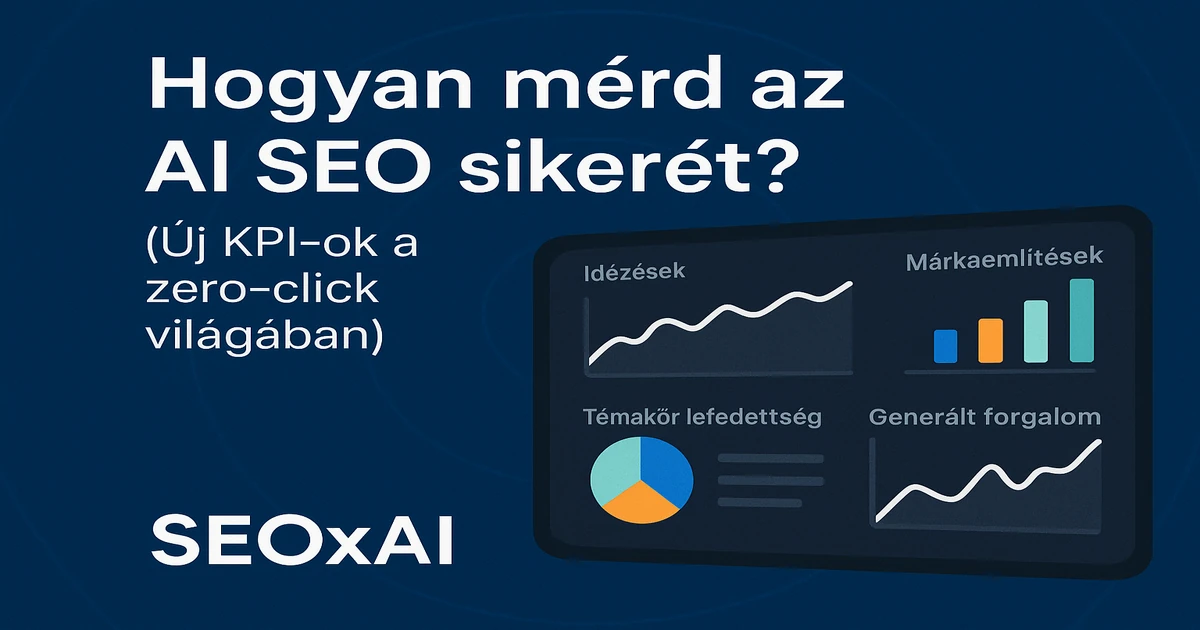
In the era of AI Overviews and zero-click searches, traditional SEO metrics like organic traffic and CTR no longer tell the full story. If users get the answer on Google, the click may never happen—but your brand visibility still grows. So how do you measure that and prove return on investment (ROI)? This article walks through the new, must-have KPIs.
Why aren’t traditional SEO metrics enough?
Classic SEO was built around clicks and website sessions. The goal was to rank as high as possible so users would click through to you. Generative AI rewrites that model:
-
Zero-click answers: AI compiles a ready-made response from the best sources, so users often don’t need to click further. Traffic can drop while your visibility increases.
-
Attribution gets blurry: It becomes harder to identify whether a user later searched for your brand directly because they first saw you mentioned in an AI answer.
-
Rankings become more dynamic: Instead of “Top 10,” the goal becomes being the “Top 1” cited source for a given topic—which is much harder to measure with traditional tools. You can read about preparation here: The future of AI SEO (2025+) .
What are the most important new AI-first KPIs?
These new metrics measure visibility, credibility, and topical coverage—rather than clicks. These are the ones you should track:
-
Citations and source appearances (Citation Tracking): This is the most important new metric. You need to track—manually or with specialized software—how many times your brand or content shows up as a cited source in AI Overviews answers.
-
Brand mentions and branded searches (Branded Searches): In Google Search Console, monitor growth in searches for your brand. If more people are searching for you directly, that’s a signal that trust is being built from exposure in AI answers.
-
Topical authority coverage (Topical Authority Coverage): Assess, within a given topic cluster, how many relevant questions your content answers. The goal is 100% coverage, which increases the chance that Google views your site as the expert on the topic. You can read the basics here: What is AEO? .
-
Inferred organic traffic (Inferred Organic Traffic): While direct traffic may decline, traffic from longer, more specific long-tail searches can grow. These are users who want to go deeper after reading an AI answer.
How do you prove AI SEO ROI?
You need to connect the metrics above to business outcomes. Here’s a simple framework:
-
Visibility report: Document citations and brand mentions monthly. Present this as the new equivalent of the traditional “impressions” metric.
-
Correlation with branded searches: Call out the relationship: as your content appears more often as a source in AI answers, the number of direct branded searches increases too.
-
Conversions from deeper content: Analyze what percentage of visitors landing on specific long-tail articles convert (e.g., newsletter signup, download). These are your most engaged users. Great content starts with the right strategy: AI search trends and content strategy .
What’s the key takeaway?
Measuring AI SEO is about a mindset shift. Instead of focusing on direct, immediate traffic acquisition, you should concentrate on long-term brand building and earning expert status. Document everything, track the new metrics, and tie them to business results—this is how you prove your strategy is successful in the age of generative AI.
Frequently asked questions
What’s the most important new AI SEO metric?
Citation tracking—how often you’re cited or shown as a source—is the most important. It most directly indicates whether AI systems consider your content credible and relevant for a given topic.
How can I track citations in AI answers?
Right now, mostly with a manual process: run regular incognito searches for your primary keywords and questions. There are also specialized tools (e.g., Authoritas, BrightEdge) that automate parts of this workflow.
Does declining organic traffic mean something bad in the AI SEO era?
Not necessarily. Because of zero-click searches, overall traffic may drop, but the traffic that remains can be far more targeted and engaged. A key success signal is that even as traffic declines, brand mentions and branded searches increase.
Enjoyed this article?
Don't miss the latest AI SEO strategies. Check out our services!