Introducing llms.txt: How to Control What an AI Can Learn About You
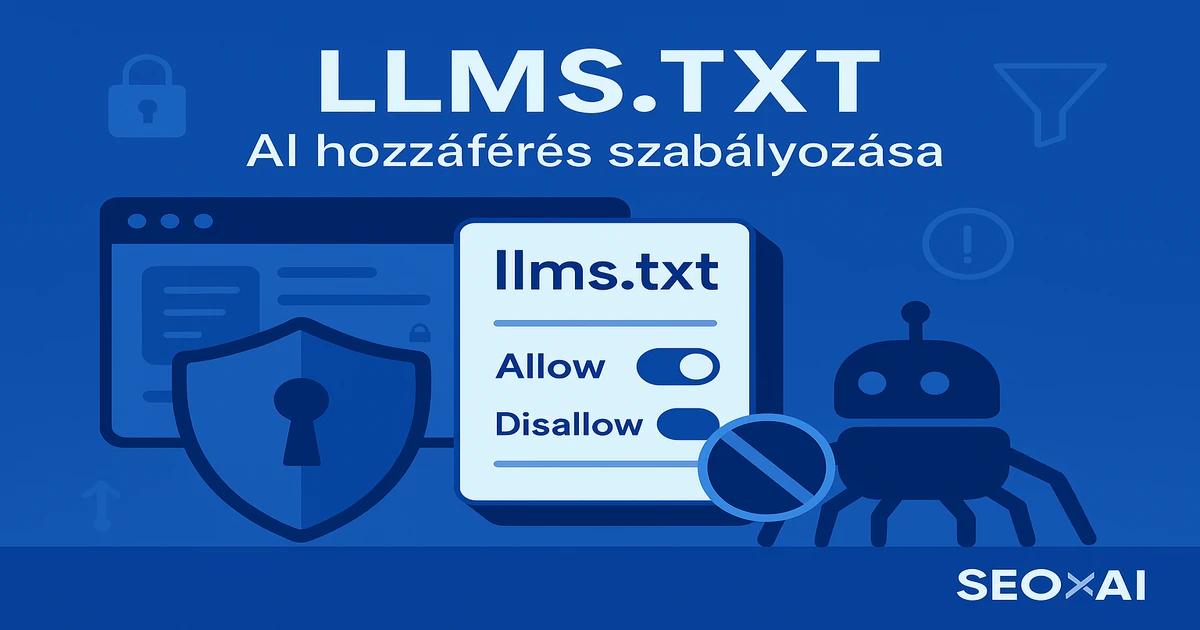
Every SEO professional knows the robots.txt file: it’s the standard that controls how search engine crawlers access your website. But what about AI systems that don’t index your pages—they learn from your content? That’s where llms.txt comes in: a new, emerging standard that could become key to responsible AI usage and intellectual property protection.
Why do we need a new standard alongside robots.txt?
The primary purpose of robots.txt is to regulate crawling and indexing for search engines. However, the data-collection bots used by companies building modern Large Language Models (LLMs) show up with a different goal:
-
The goal is training, not indexing: AI crawlers aren’t interested in rankings. They collect data to train their language models, incorporating your content into their own knowledge base.
-
Intellectual property concerns: If an AI learns from your unique, expert articles and then uses that knowledge to answer users’ questions (possibly without attribution), it raises serious copyright and business issues.
-
Cost and resource control: AI scrapers can be extremely aggressive, placing significant load on your server. llms.txt can help regulate that too. We wrote about the dangers of irresponsible AI usage here: The dark side of AI SEO .
How does llms.txt work in practice?
llms.txt is a simple text file that you place in your website’s root directory, in the same location as robots.txt ( https://example.com/llms.txt). Its syntax is similar to robots.txt, but tailored to AI-specific needs.
{# Allow all AI models except OpenAI User-Agent: * Allow: / User-Agent: GPTBot Disallow: / # Another example: Allow the "human" Googlebot, but block Google's AI bot User-Agent: Google-Extended Disallow: / # Block commercial use only, but not research User-Agent: * Disallow: / Allow: / Usage-Policy: no-commercial-use} Key directives:
-
User-Agent: Specify the name of the AI crawler you want to block or allow (e.g., GPTBot, Google-Extended, anthropic-ai).
-
Allow / Disallow: Works the same way as in robots.txt, specifying directories or files whose access you want to control.
-
Usage-Policy (proposed new directive): A fine-tuning option where you can specify the mode of use (e.g., no-commercial-use, research-only).
Why can this strengthen your E-E-A-T signals?
While Google hasn’t officially confirmed that using llms.txt is a ranking factor, a responsible and ethical approach clearly strengthens your site’s trustworthiness.
-
Proactive protection of intellectual property: You signal to search platforms that you manage your content deliberately and take copyrights seriously. That’s a sign of Authoritativeness.
-
User trust: It also communicates to users that you operate ethically, which can increase trust in your brand. We wrote about trust and E-E-A-T here: AI and E-E-A-T .
-
Preparing for the future: AI ethics and data privacy are becoming increasingly important. Early adoption of llms.txt shows your site is up to date and at the forefront of the latest AI SEO trends. This mindset is essential for a strong AEO strategy .
Frequently Asked Questions
Does every AI company respect llms.txt?
Not yet. llms.txt is an emerging, community-driven initiative—not an official web standard. Large, reputable companies (like Google, OpenAI, Anthropic) typically respect these rules, but smaller or less ethical actors may ignore them.
If I block AI crawlers, won’t that hurt my SEO?
This is a nuanced question. If you block the Google-Extended bot, your content likely won’t appear in features powered by Vertex AI. You need to find the balance between protecting intellectual property and maintaining visibility. A good compromise may be to block only your most valuable articles that contain unique, original research—rather than entire directories.
Where can I find a list of known AI User-Agents?
Several online sources compile these, but the most comprehensive lists are usually found on technical SEO blogs or on GitHub. The most well-known include: GPTBot, Google-Extended, anthropic-ai, CCBot, PerplexityBot. The list keeps growing.
Enjoyed this article?
Don't miss the latest AI SEO strategies. Check out our services!